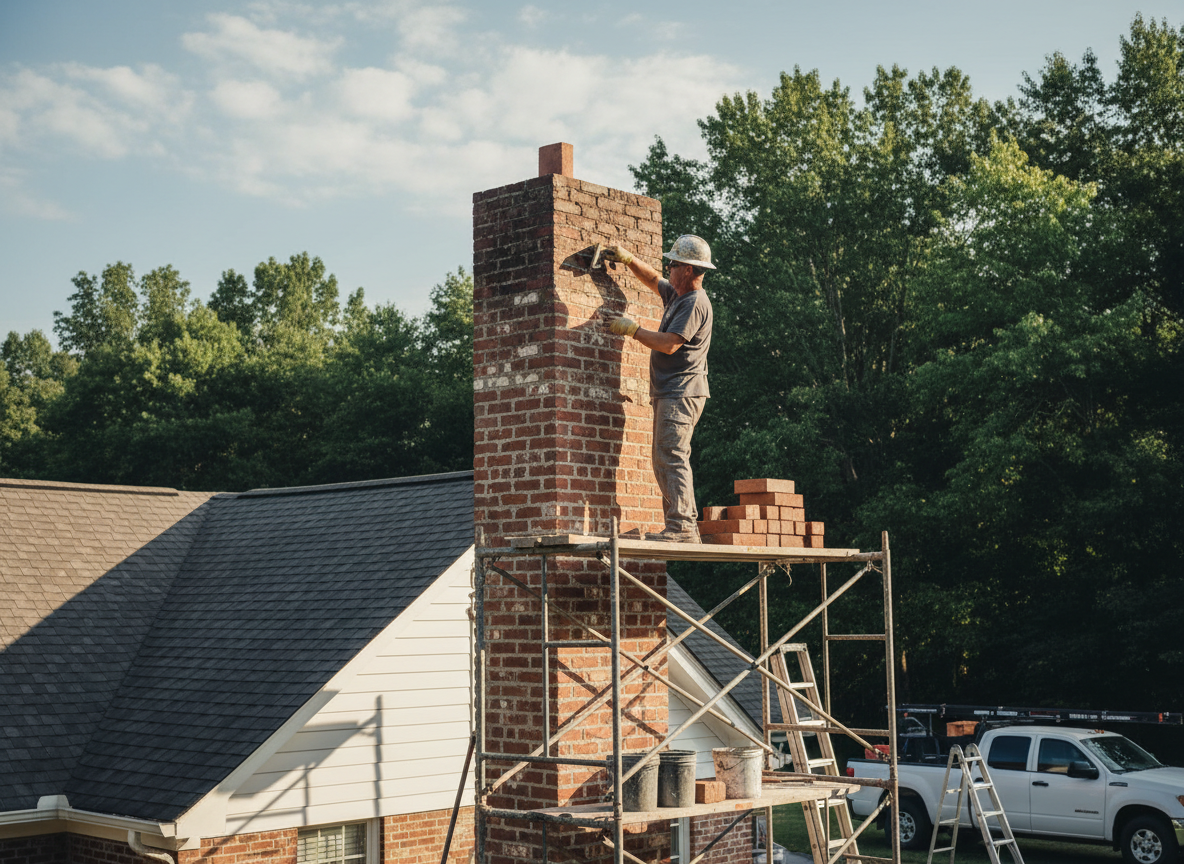
Mint Hill homes built decades ago in neighborhoods like Bainbridge often feature brick chimneys exposed to the region's humid subtropical conditions. Hot summers drive repeated moisture cycles that break down mortar joints while mild winters rarely produce the freeze-thaw warnings that alert owners elsewhere. Over time this leads to spalling bricks, loose crowns, and water tracking behind the flue liner, especially on chimneys serving older single-story ranches common near Mint Hill Veterans Memorial Park.
Repair work here requires matching existing brick texture and color from local suppliers rather than generic replacements that stand out against weathered masonry. We remove deteriorated mortar to sufficient depth, install new Type N mortar compatible with the softer historic brick, and address flashing integration at the roofline where Charlotte-area storms push water under step flashing. Homeowners frequently overlook the chimney's role in overall attic ventilation, so we check for related moisture paths into the living space before closing the job.
Terrain around The Farm at Mint Hill creates additional runoff patterns that pool against foundations and wick upward into lower chimney courses. This demands excavation checks and proper drainage corrections alongside the masonry work. We also verify that any new brick or mortar meets Mecklenburg County requirements for exterior exposure without introducing incompatible materials that accelerate future deterioration.
Technician insight
In Mint Hill, the thing that catches most people out with brick chimney repair is how mild winters let constant humidity from the subtropical climate penetrate mortar joints in Bainbridge and The Farm at Mint Hill homes without obvious freeze damage, so owners ignore it until interior staining appears years later.
Spalling on South-facing Chimney
Homeowner in Bainbridge noticed loose bricks after heavy summer rain. Inspection revealed failed mortar and water behind the flue from roofline runoff. We removed damaged brick, repointed with matching mortar, and corrected flashing. The chimney now sheds water properly without further interior moisture issues.
How it works
- 1
On-site Assessment
Inspect brick condition, mortar joints, crown, and flashing integration while noting exposure to local humidity and runoff patterns.
- 2
Damage Documentation
Photograph and map spalled areas, loose bricks, and water intrusion points specific to Mint Hill housing stock.
- 3
Material Matching and Prep
Source compatible brick and Type N mortar, then remove deteriorated sections without disturbing sound masonry.
- 4
Repair Execution
Rebuild or repoint affected sections, reseal crown and flashing transitions, and verify proper drainage away from the structure.
- 5
Final Verification
Confirm water shedding, structural stability, and appearance consistency with surrounding brickwork before completing the visit.
Pricing
Upfront quotes provided after inspection; cost varies with extent of brick replacement and access conditions.