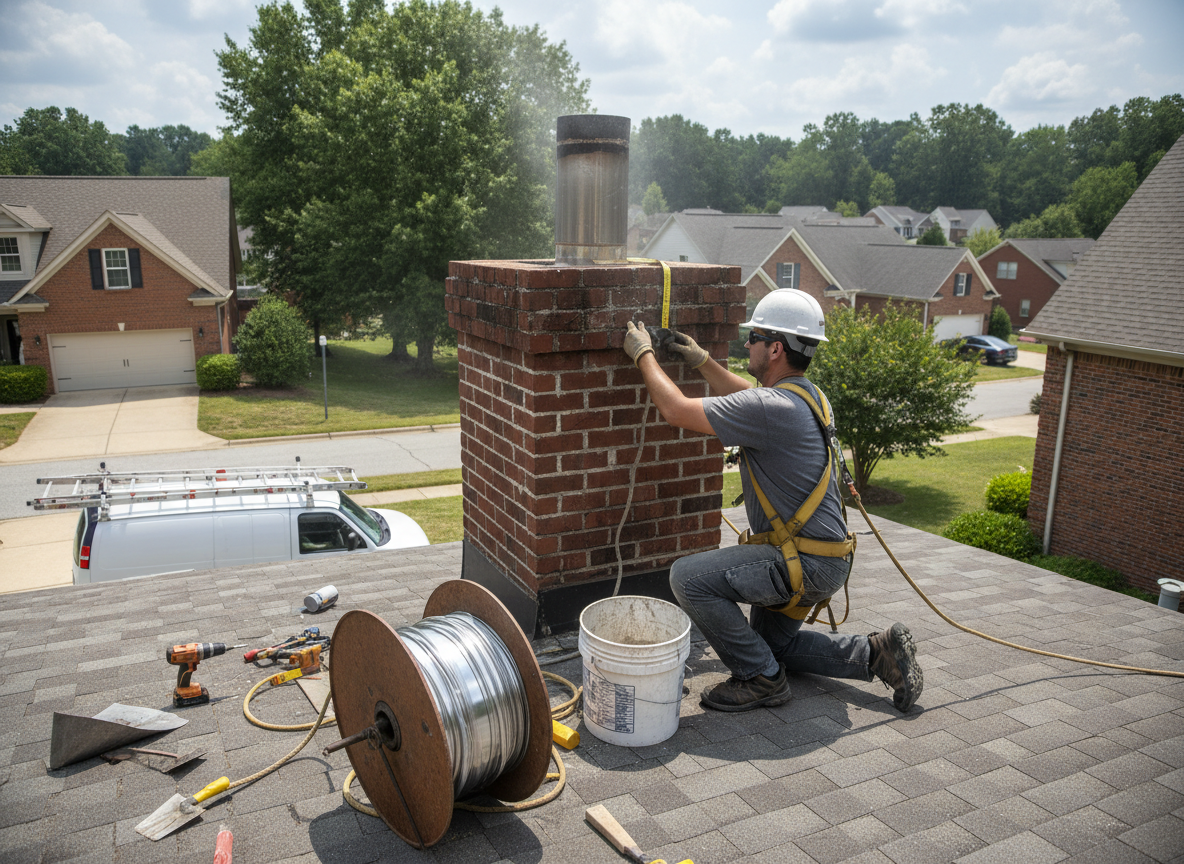
Mint Hill homes in neighborhoods like Bainbridge and The Farm at Mint Hill often feature brick chimneys built decades ago that now need relining to meet current Mecklenburg County standards. Hot summers drive heavy use of fireplaces during mild winters, allowing creosote to accumulate faster in the high humidity. A proper stainless steel or cast-in-place liner creates a sealed flue that prevents acidic moisture from eating through mortar joints and leaking into attics or walls near Mint Hill Veterans Memorial Park.
Relining work here differs from Charlotte jobs because many Mint Hill properties sit on clay-heavy soil that shifts slightly with seasonal rains, stressing older chimney bases. We measure the exact flue dimensions on site, then select a liner sized to maintain proper draft without restricting airflow. Homeowners in these areas frequently discover hidden cracks only after heavy summer thunderstorms saturate the masonry, making early relining essential before winter use.
Edge cases include chimneys serving wood stoves in ranch-style homes where the liner must route around existing offsets without creating new creosote traps. We always verify clearance to combustibles and confirm the liner terminates above the roofline per local code. Skipping this step in humid conditions leads to rapid deterioration that shows up as water stains on ceilings during the next rainy season.
Technician insight
In Mint Hill, the thing that catches most people out with chimney relining is how the humid subtropical summers accelerate creosote and moisture damage inside unlined flues of homes built before the 1990s in Bainbridge and along Lawyers Road. Those older brick stacks shift just enough on clay soil after heavy rains to open hairline cracks that a liner must bridge.
Relining After Summer Moisture Damage
A Mint Hill homeowner noticed water stains near the fireplace after several thunderstorms. We found the original flue had deteriorated from humidity-driven condensation. A stainless liner was installed to seal the chimney and restore safe draft for winter use.
How it works
- 1
Site Assessment
We inspect the full chimney height and flue condition from the roof down to the cleanout, noting any offsets common in Mint Hill construction.
- 2
Flue Preparation
Debris and loose mortar are removed so the new liner seats correctly without gaps that trap moisture in the humid climate.
- 3
Liner Installation
A stainless steel or cast-in-place liner is fitted and sealed, restoring draft while protecting against creosote and condensation.
- 4
Final Testing
Smoke testing confirms proper exhaust flow before the chimney is returned to service for the homeowner.
Pricing
Cost depends on chimney height, number of flues, and liner material; we provide upfront quotes after inspection.