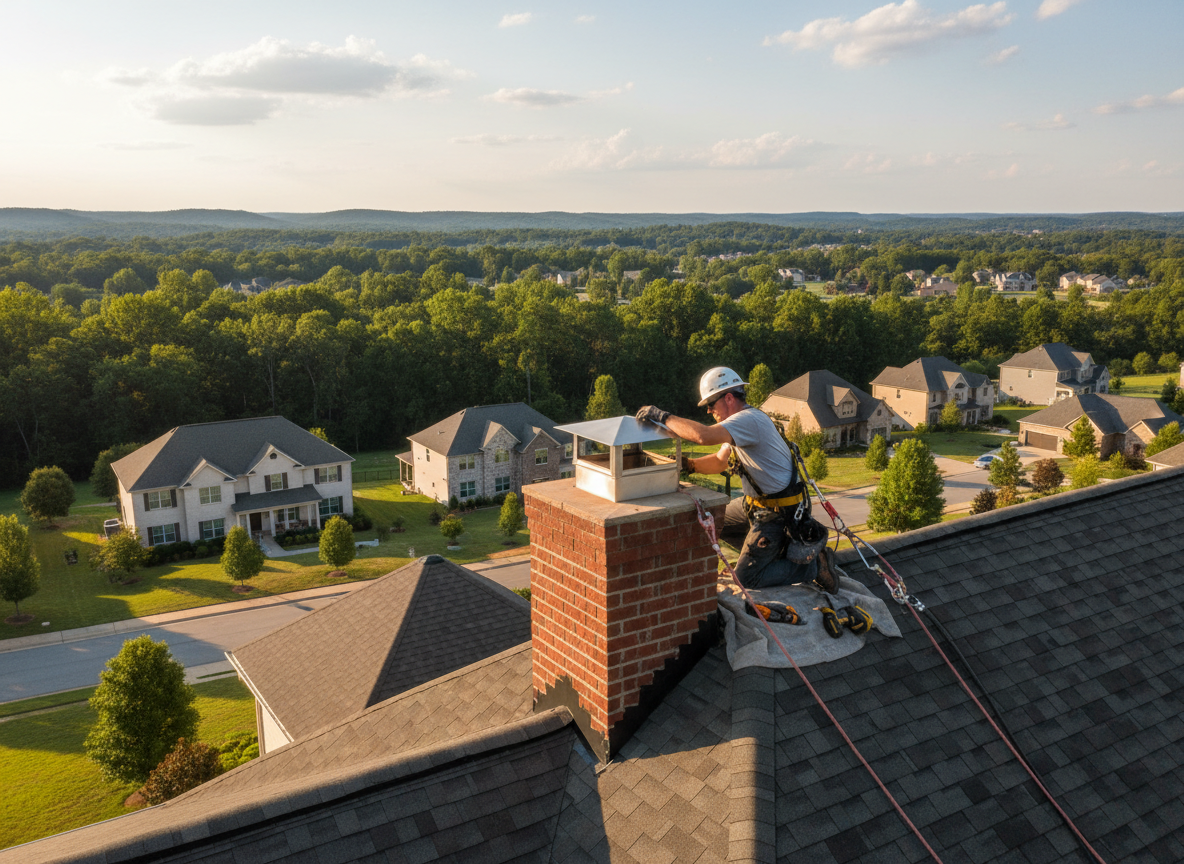
Mint Hill homes in neighborhoods like Bainbridge and The Farm at Mint Hill often sit under the humid subtropical conditions that bring heavy summer rains and mild winters. These patterns drive water intrusion and rust on flue tops faster than in drier regions near Charlotte. A proper cap must seal against wind-driven rain while allowing draft, and the work frequently involves checking the crown and flue tile condition on roofs that have aged through decades of Mecklenburg County weather cycles.
Standard galvanized caps corrode quickly here because constant humidity keeps moisture on metal surfaces. We fit stainless or copper units with proper spark arrestors sized to the flue, and we secure them with masonry anchors rather than relying on friction fit that fails after the first strong thunderstorm. On two-story homes near Mint Hill Veterans Memorial Park the added height changes the lift and tie-off requirements, so every install includes a full roof assessment before any hardware is placed.
Edge cases appear on homes where previous owners added gas logs or wood stoves without updating the cap. Oversized openings let embers escape and undersized caps restrict draft, both common when Charlotte-area contractors skip the flue measurement step. We always verify the actual tile dimensions on site rather than assuming the original plans match what is on the roof today.
Code compliance in Mecklenburg County requires caps that meet the 1/2-inch spark arrestor mesh rule and proper clearance from nearby trees that grow quickly in this climate. Skipping these details leads to insurance issues after a chimney fire or wind event. Every GraftGlide job includes a written report of the existing flue condition so homeowners know exactly what was addressed.
Technician insight
In Mint Hill, the thing that catches most people out with chimney cap installation is how quickly the humid subtropical summers rust a standard cap on older roofs in Bainbridge and The Farm at Mint Hill. The constant moisture plus wind-driven rain from the flat terrain means friction-fit caps loosen within two seasons, and most homeowners never notice until water stains appear on the living-room ceiling.
Cap Upgrade After Storm Damage
A home in The Farm at Mint Hill had water stains after a summer thunderstorm. We found the existing galvanized cap rusted through at the seams and the crown cracked from repeated freeze-thaw cycles. We replaced it with a stainless unit anchored into sound masonry and added proper flashing. No further leaks occurred the following winter.
How it works
- 1
Site Assessment
We climb the roof from 11232 Lawyers Rd and measure the actual flue, check crown condition, and note any tree overhang common in Mint Hill yards.
- 2
Material Selection
Stainless or copper cap is chosen to resist the constant humidity that accelerates rust on standard galvanized units in this area.
- 3
Secure Installation
Masonry anchors and proper flashing are installed so the cap stays tight through summer storms and winter wind.
- 4
Final Check
Draft test and visual inspection confirm the cap meets Mecklenburg County clearance rules before we leave the job.
Pricing
Upfront quotes given after the roof inspection; price moves with flue size, roof pitch, and whether the crown needs repair.