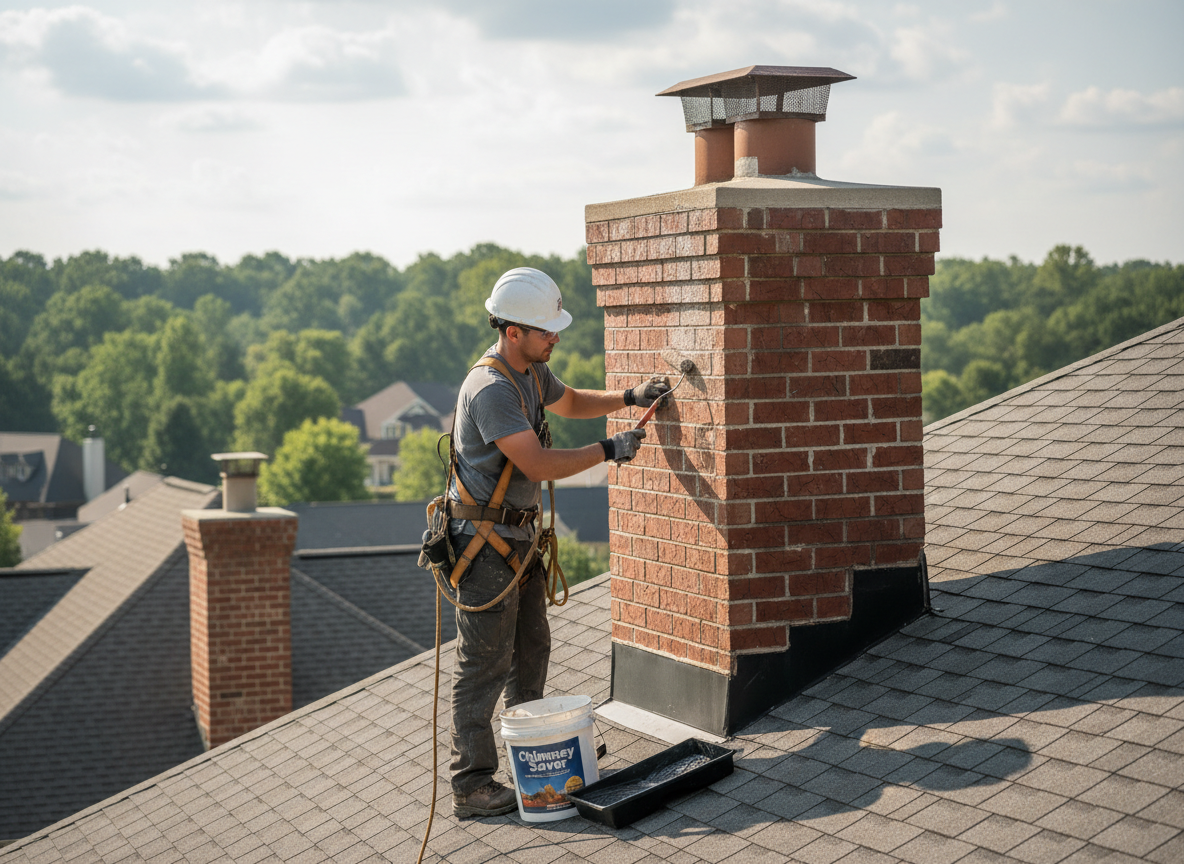
Mint Hill sits in Mecklenburg County with a humid subtropical climate that brings frequent summer thunderstorms and mild winter rains. These conditions drive water into mortar joints, flue tiles, and crown surfaces on homes throughout Bainbridge and The Farm at Mint Hill. Older brick chimneys common in the area absorb moisture that later freezes or evaporates, widening cracks and allowing interior leaks. Proper waterproofing uses breathable masonry sealers that penetrate without trapping vapor, unlike film-forming coatings that blister in our heat.
Application starts with a full inspection of the crown, flashing, and chase exterior while noting how nearby Charlotte traffic and tree cover affect drying times. Technicians clean efflorescence and loose material first, then apply two coats of silane-siloxane sealer to the entire masonry stack. Edge cases include chimneys on sloped lots where runoff pools against the base or homes with metal caps that need separate treatment to avoid galvanic reaction. Mecklenburg County building practices often leave original flashing thin, so we check and reseal those transitions during every waterproofing visit.
Homeowners in Mint Hill frequently overlook how the clay soils retain moisture against lower chimney sections, accelerating spalling on the north-facing side. We address this by extending treatment below grade where accessible and advising on grading improvements. The 24/7 operation from 11232 Lawyers Rd allows same-day response when sudden storms expose new leaks before they reach living spaces.
Seasonal Timing
Waterproofing performs best in spring and fall when temperatures stay above 50 degrees for 48 hours after application. Summer heat can cause rapid skinning, while winter applications risk wash-off from unexpected rain.
Technician insight
In Mint Hill, the thing that catches most people out with chimney waterproofing is clay soil around Bainbridge and The Farm at Mint Hill holding moisture against the lower stack long after rain stops. That hidden saturation lets water wick upward into mortar even when the crown looks sealed. We always check grading and north-side exposure first.
Mint Hill Chimney Leak After Summer Storms
Heavy rain entered through hairline crown cracks on a home near Mint Hill Veterans Memorial Park. Inspection showed moisture trapped behind the flashing and rising from clay soil at the base. We cleaned, applied two coats of breathable sealer, and resealed the transitions. No further interior staining appeared after the next rainfall.
How it works
- 1
Site Assessment
Inspect crown, flue, flashing, and masonry condition while checking soil moisture and drainage around the base in Mint Hill neighborhoods.
- 2
Surface Preparation
Remove efflorescence, loose mortar, and biological growth, then allow full drying before sealer application.
- 3
Sealer Application
Apply two coats of breathable silane-siloxane waterproofing to all masonry surfaces and reseal flashing joints.
- 4
Final Check
Verify coverage and test for water beading, then document condition for the homeowner.
Pricing
Upfront quotes after inspection; cost varies with chimney height, access, and existing damage.