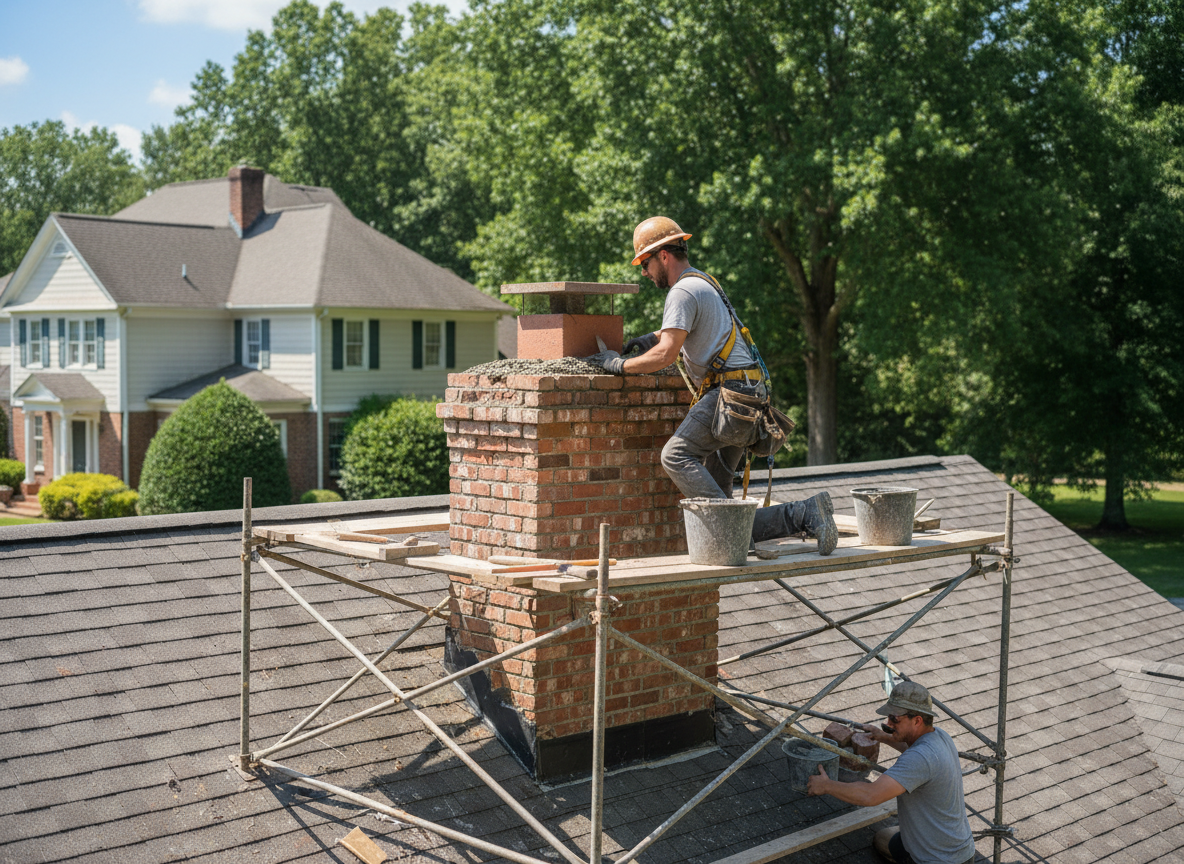
Mint Hill sits in Mecklenburg County just east of Charlotte where humid subtropical conditions bring heavy summer moisture and mild winters that keep chimneys cycling through expansion and contraction. Homes in neighborhoods like Bainbridge and The Farm at Mint Hill often feature masonry chimneys built into ranch and two-story brick houses from the 1980s onward. These stacks develop hairline cracks in the flue tile and crown that allow rainwater to reach the attic framing. A repair starts with a top-down inspection that checks for spalling brick, failed flashing, and creosote buildup that traps moisture against the liner.
Technicians working these jobs routinely see water staining on ceilings after a single heavy rain because the mild winters never fully dry out the masonry. In The Farm at Mint Hill the rolling terrain means some chimneys sit lower than surrounding rooflines and collect runoff from adjacent slopes. Standard cement parging on the crown fails faster here than in drier climates because constant humidity prevents full curing. Repairs focus on removing loose material, installing stainless steel caps, and repointing with lime-based mortar that matches the original brick expansion rate rather than rigid modern mixes.
When homeowners in Mint Hill notice white efflorescence on the exterior brick it signals ongoing moisture movement through the flue. Ignoring it allows the damp to reach the wood framing around the chimney chase. Local crews carry both traditional clay flue liners and stainless steel relining kits because many 1990s homes have offset flues that rule out full chimney removal. The job ends only after a smoke test confirms the draft pulls correctly and no new moisture paths remain.
Technician insight
In Mint Hill the thing that catches most people out with Residential chimney repair is how the mild winters and constant humidity keep moisture trapped inside the brick. Homeowners in Bainbridge often think a small crown crack is cosmetic until water reaches the attic sheathing two seasons later. The soil here holds water longer than drier parts of the county so ground-level chimneys on sloped lots need extra attention to the base flashing.
Bainbridge Chimney Leak After Summer Storms
Water stains appeared on the second-floor ceiling of a 1992 brick home in Bainbridge after repeated heavy rains. Inspection found failed crown parging and open joints allowing runoff to travel down the flue. Crew removed the damaged crown, repointed with lime mortar, and installed a new cap and step flashing. The attic stayed dry through the next winter's rain events.
How it works
- 1
Initial Site Assessment
Arrive at the Mint Hill address and examine the chimney from roof to firebox while noting roof pitch, nearby tree cover, and any visible staining on interior ceilings.
- 2
Moisture and Draft Testing
Use a moisture meter on masonry joints and perform a smoke test to locate active leaks or blocked passages caused by the area's high humidity.
- 3
Targeted Repair Work
Remove damaged crown sections, repoint brick with appropriate mortar, install new flashing, and fit a stainless cap sized for the flue.
- 4
Final Verification
Re-test draft and moisture levels, then walk the homeowner through the repaired areas and any ongoing maintenance needed for Mecklenburg County weather.
Pricing
Upfront quotes after on-site inspection; final cost depends on chimney height, extent of masonry damage, and whether flue relining is required.